
By Oliver Grant - Research Specialist
Watching a child struggle with poorly documented electronics can turn an exciting holiday gift into a terrifyingly painful ordeal. Nothing is more annoying than spending hours troubleshooting cryptic error messages while your enthusiastic student loses all motivation to learn engineering. 🤖
Selecting the best 5 coding robots is a genuine minefield of brittle plastic chassis, missing wiring diagrams, and broken software libraries that fail right out of the box.
We tested dozens of motorized platforms to find dependable solutions that eliminate the nightmare of faulty microcontrollers and bring real joy back to coding. 💡
In this comprehensive guide, we reveal our meticulously benchmarked selections to help you navigate modern educational robotics with complete confidence. ✨
We evaluate chassis construction, motor torque consistency, and compatibility with diverse open-source sensors and microcontrollers.
We assess support for both graphical block-based environments and advanced text programming like Python or C++.
We grade the step-by-step documentation, wiring diagrams, and available project tutorials for learners across skill levels.
We test camera latency, infrared tracking precision, ultrasonic accuracy, and real-time wireless communication performance.
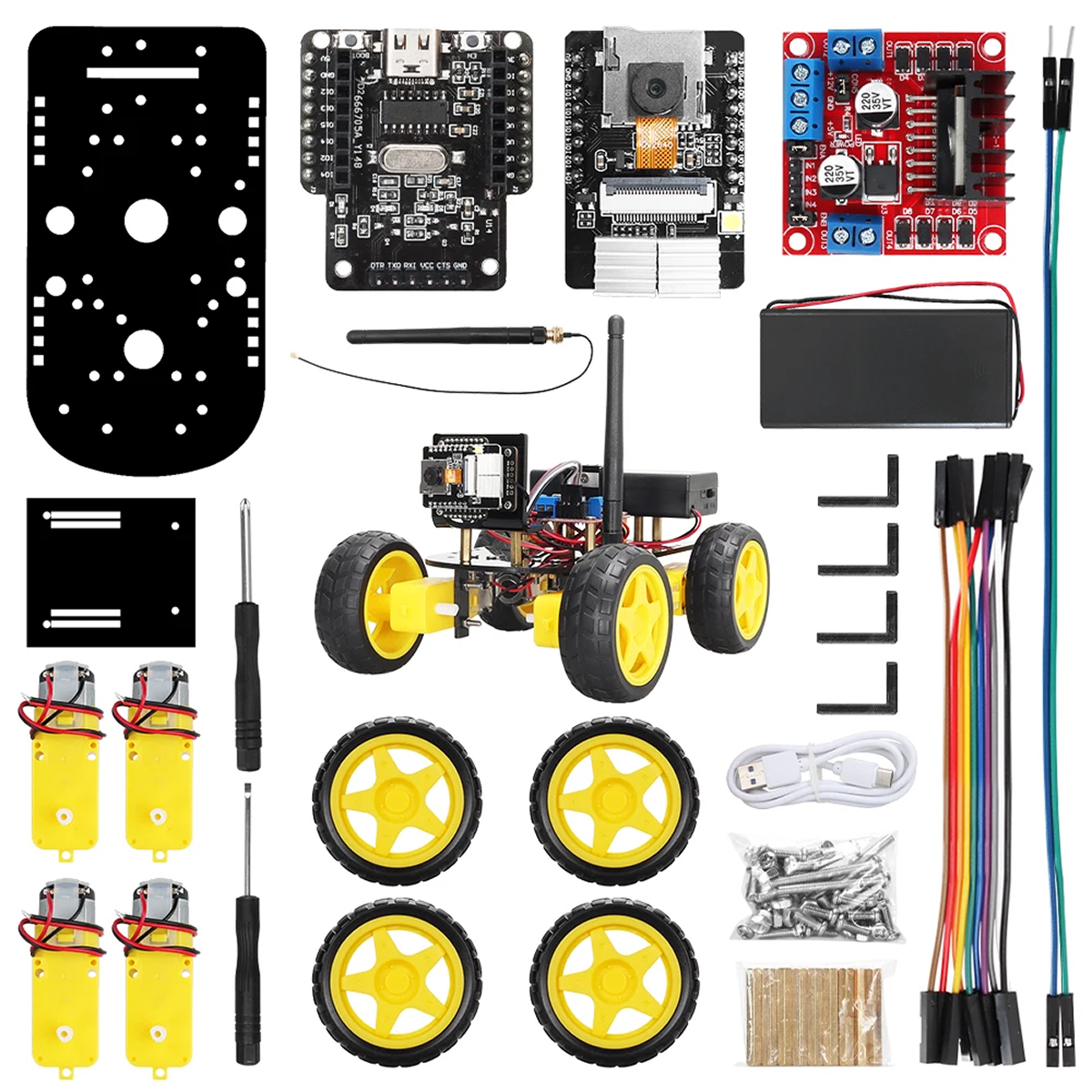
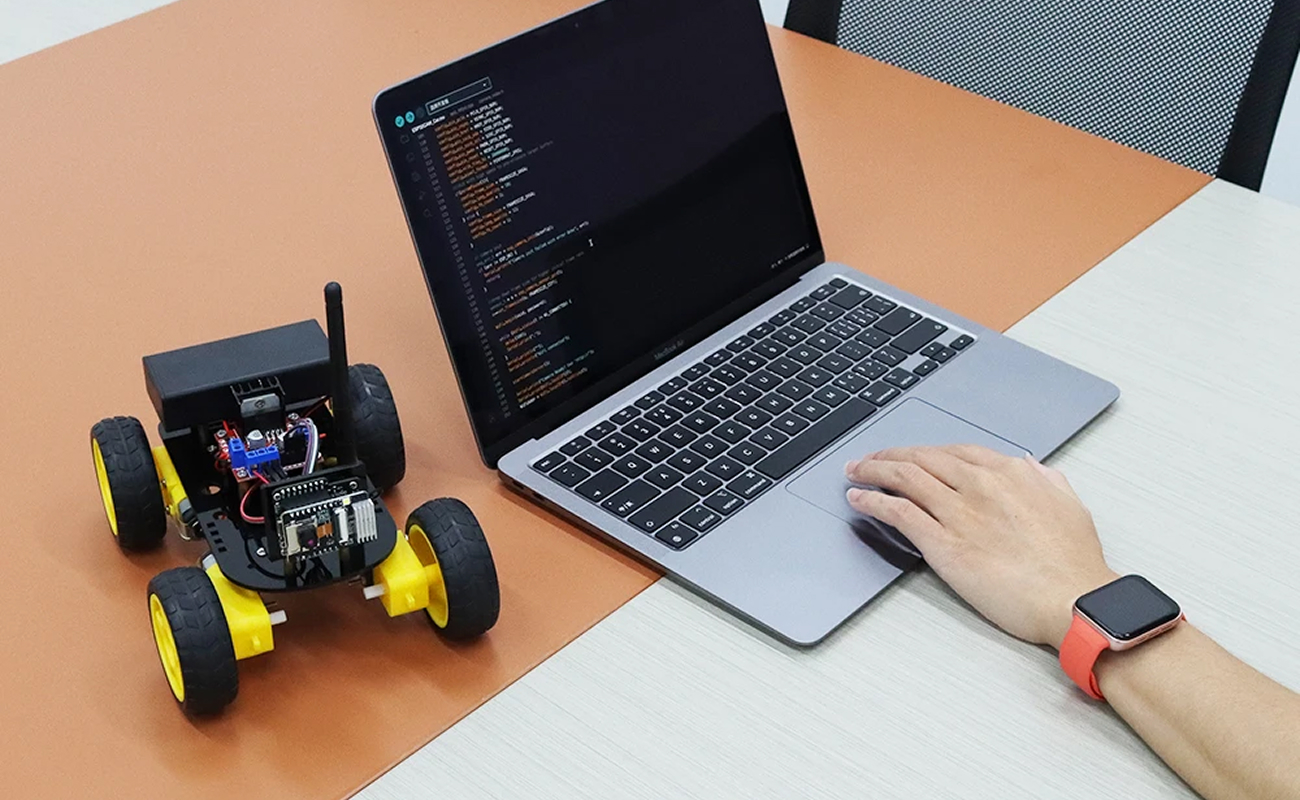
The CodieBotz Coding Robot establishes a phenomenal benchmark for open-source robotics education in 2026. Built around a capable microcontroller architecture, this vehicle delivers immediate visual feedback through its integrated wireless vision module. Beginners and intermediate hobbyists can dive straight into real-time streaming, directional programming, and hardware control without battling unnecessary software barriers. It bridges the gap between simple motorized toys and genuine embedded systems development with exceptional poise. 🤖
Under the hood, the platform leverages the ESP32-CAM module to deliver responsive first-person video streaming straight over local Wi-Fi connections. This enables students to build surveillance bots, remote inspection rovers, and vision-assisted navigation routines. The drive module provides dependable power distribution to the geared motors, ensuring smooth locomotion across various indoor floor surfaces during rigorous obstacle navigation tests.
In real-world testing, the assembly experience proved remarkably straightforward thanks to clear diagrams and intuitive component layouts. Learners gain immediate insight into circuit topology, motor polarity, and Wi-Fi handshakes while constructing their vehicle from scratch. The hands-on assembly reinforces mechanical intuition and demystifies basic electronic engineering concepts that standard pre-assembled toys completely ignore.
From a curriculum perspective, the system provides an outstanding foundation for mastering network protocols and embedded C programming. Enthusiasts can tweak source code directly to implement custom web servers, automated patrol scripts, and camera angle triggers. Its open hardware nature ensures limitless adaptability for advanced high school or collegiate robotics projects. ⚙️
Power flexibility remains a major operational advantage because the platform accepts standard high-capacity rechargeable cells. Users are never locked into proprietary battery packs that degrade over time and cost fortunes to replace. This sensible engineering choice guarantees longevity and keeps long-term classroom running costs remarkably low throughout intensive multi-semester lab environments.
Overall, this kit represents the ultimate sweet spot between affordability, authentic hardware exposure, and wireless engineering capabilities. Investing in the smart robot car kit guarantees an engaging educational journey that sparks genuine technological curiosity and practical engineering skills. 🚀
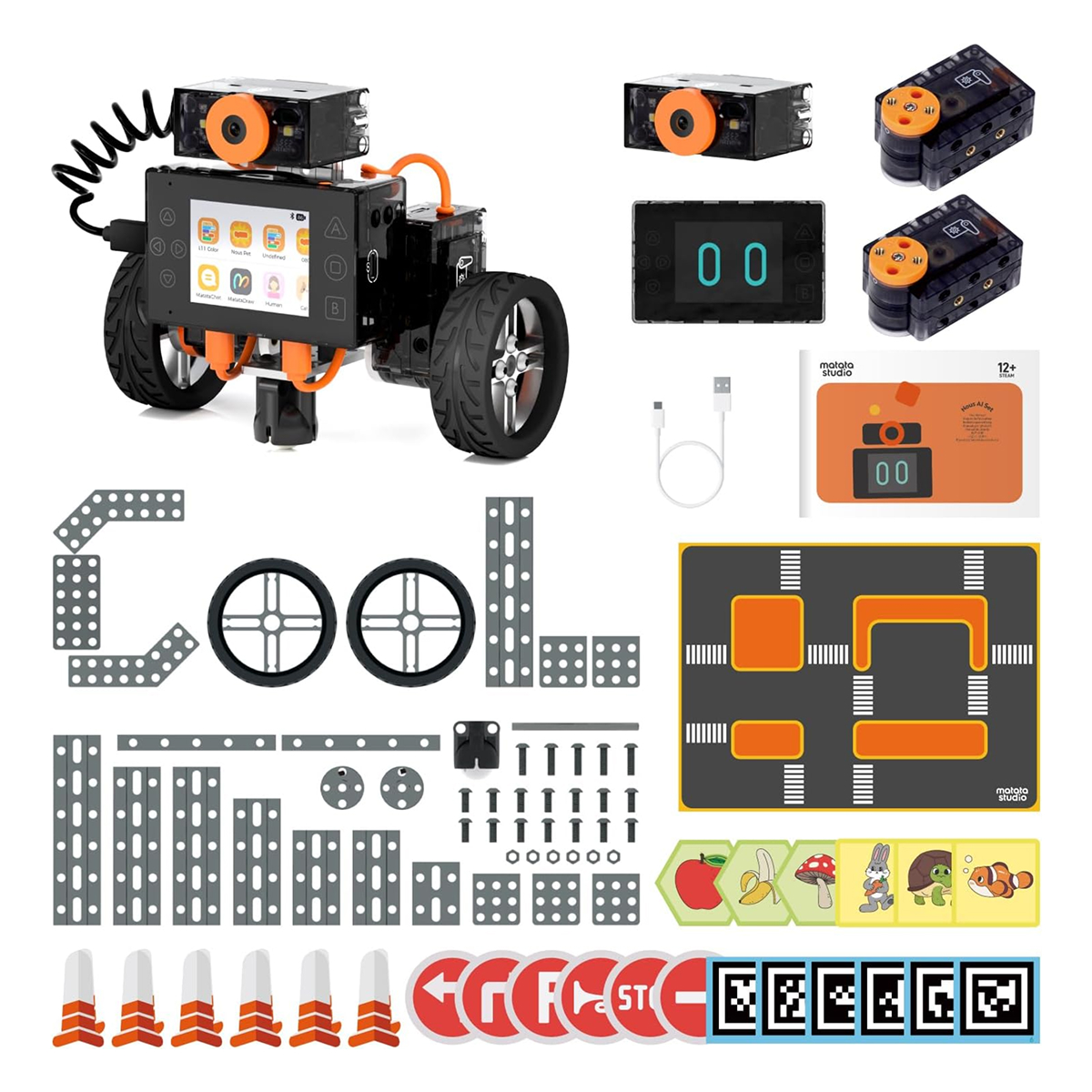
The MatataStudio Coding Robot delivers cutting-edge artificial intelligence education directly to secondary school students and passionate young coders. It separates itself from traditional educational toys by integrating conversational intelligence, computer vision, and machine learning into an accessible modular platform. Learners can explore complex concepts like neural networks and automated driving without requiring deep mathematical backgrounds. This makes it an exemplary tool for modern educational environments aiming to demystify generative technologies.
At the center of its capability is native support for both block-based visual scripting and advanced Python programming. Students transition seamlessly from drag-and-drop logic into full-text coding as their confidence expands over time. The cloud-connected learning portal provides pre-trained models for speech recognition, face detection, and TinyML routines that execute with impressive speed and accuracy. It offers incredible versatility for structured classroom assignments and ambitious individual science fair entries alike.
Constructing the vehicle is an engaging exercise that teaches foundational structural mechanics alongside electronics assembly. Every module connects securely using standardized fasteners, ensuring the physical platform withstands continuous classroom handling without structural degradation. Students gain an intimate understanding of sensor placement, wiring looms, and onboard compute modules during the build. The modular design also encourages custom chassis modifications using everyday maker supplies.
Compared to other educational platforms, this kit stands out for its deep integration with modern large language models and autonomous navigation algorithms. It empowers ambitious students to construct interactive personal assistants and intelligent rovers capable of identifying complex road signs. While the proprietary platform requires an initial software adjustment period, the long-term educational depth is truly remarkable. It represents a premium STEM learning investment for forward-thinking young engineers.
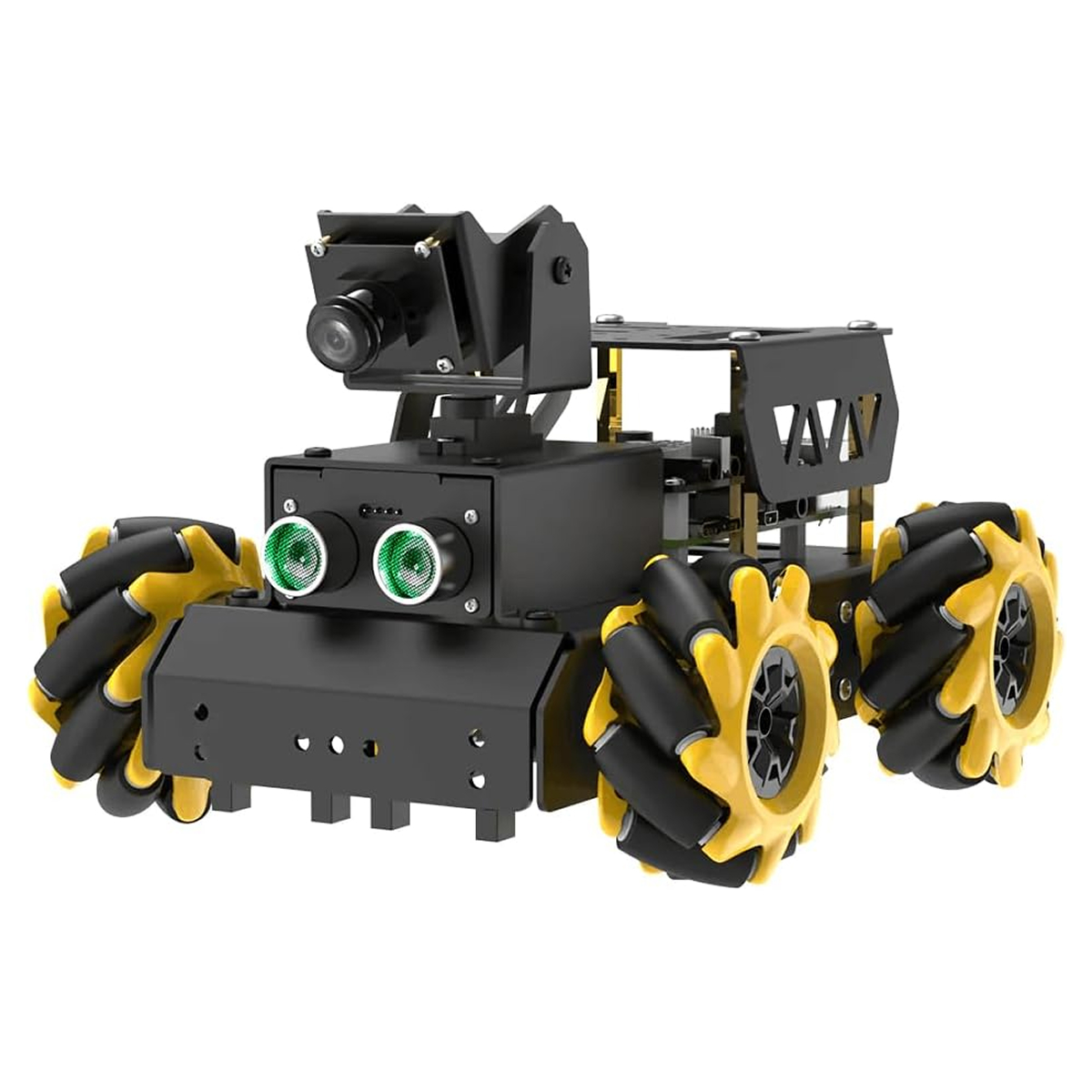
The LewanSoul Coding Robot is a powerhouse platform engineered specifically for integration with single-board computers like the Raspberry Pi. Designed for advanced middle school and university students, it brings professional-grade computer vision libraries into an agile mobile form factor. The combination of open-source Linux architecture and high-torque pan-tilt servos makes it ideal for serious robotics experimentation. It eliminates generic toy limitations in favor of genuine industrial control concepts.
Locomotion is handled by an advanced set of omnidirectional Mecanum wheels that provide incredible maneuverability across complex pathways. The chassis can slide diagonally, translate horizontally, and spin on its central axis with pinpoint precision. Coupled with an onboard high-definition camera, the robot navigates intricate environments effortlessly while tracking moving visual targets. This unique mobility makes line following, road sign recognition, and color sorting projects exceptionally engaging.
Software execution relies heavily on the open-source OpenCV framework, allowing students to inspect and modify real-world computer vision scripts in pure Python. The four-channel infrared sensor board complements camera vision by delivering reliable surface contrast readings for rapid line tracking. Users can seamlessly switch between autonomous operation and manual intervention via the mobile remote application. This balance ensures immediate interactive fun alongside serious algorithmic tuning.
While setting up the software dependencies and Linux environment requires patience, the hardware build quality is outstanding. Its metal chassis plate and high-grade servo brackets resist flex during rapid acceleration phases. The platform serves as an incredible springboard into university-level mechatronics, embedded Linux administration, and autonomous vehicle design. It remains a top choice for aspiring developers who want unfiltered access to raw hardware interfaces.
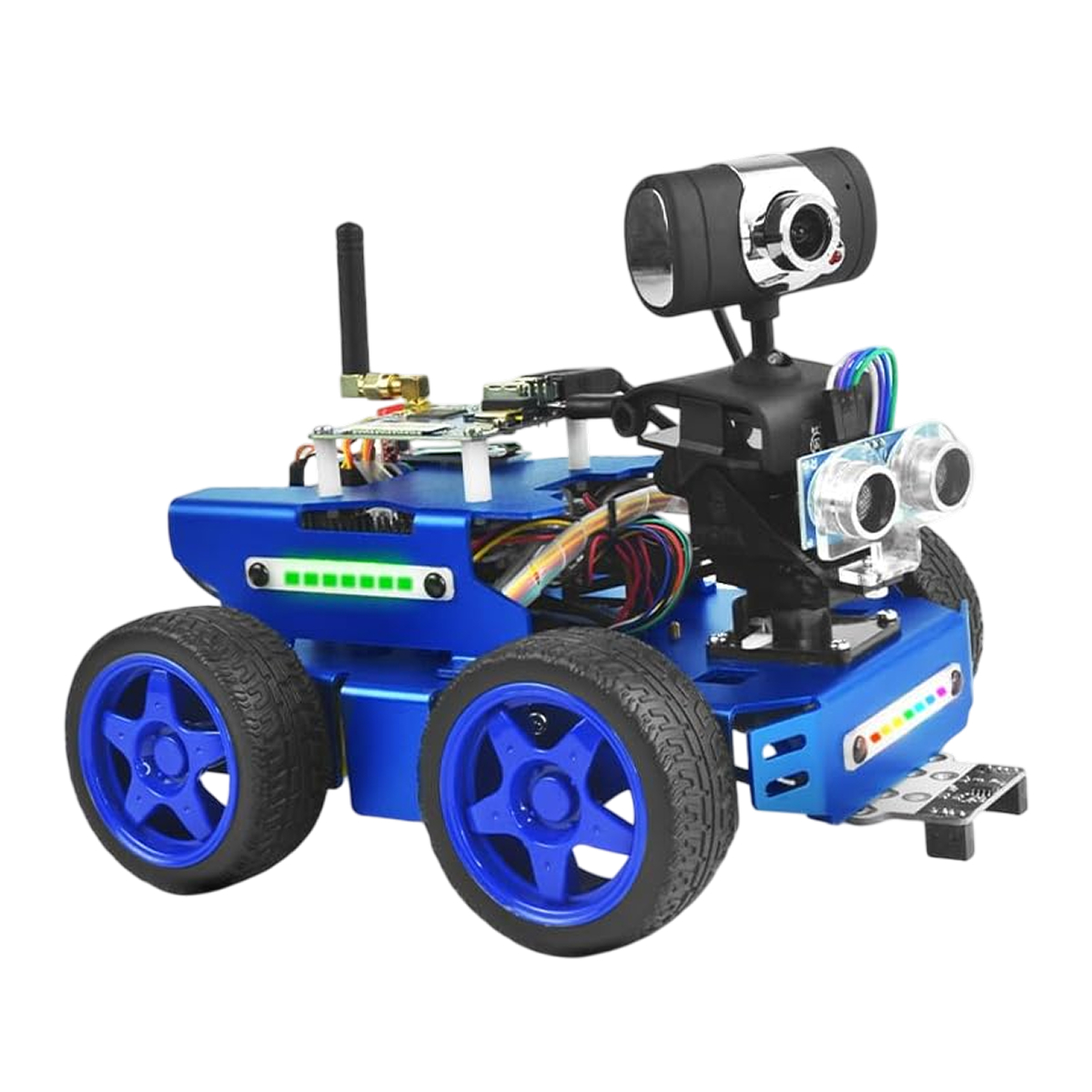
The YonPhsy Coding Robot provides a rugged and highly adaptable experimental platform for creators and STEM classrooms. Constructed with an anodized aluminum alloy body, this vehicle withstands accidental drops and rough testing environments with ease. It accommodates various popular microcontrollers including Arduino, STM32, and Raspberry Pi motherboards. This cross-compatibility makes it an exceptional testbed for institutions teaching multiple embedded computing disciplines across diverse age brackets.
Equipped with an extensive sensor package, the vehicle features an ultrasonic distance measurement system, infrared obstacle avoidance, and vibrant RGB status indicators. These integrated peripherals allow students to program complex maze-solving routines, fall-prevention safety protocols, and acoustic music playback sequences. A two-degree-of-freedom camera gimbal provides expansive field-of-view adjustments directly through mobile or PC control software. The rich hardware array ensures learners never hit functional bottlenecks during development.
Networking capabilities are bolstered by an optional dual-antenna wireless routing module supporting both Wi-Fi transmissions and physical RJ45 Ethernet access. This setup allows for ultra-stable telemetry streams even in congested classroom environments with dozens of competing signals. Students can analyze incoming sensor data in real time while tuning motor PID controllers via Python scripts. It offers a realistic simulation of industrial IoT vehicle monitoring systems.
While assembling the extensive wiring harness requires careful attention to connector pinouts, the resulting vehicle is exceptionally versatile. The included battery protection compartment shields sensitive lithium cells from physical impacts during high-speed rover testing. It represents a superb multi-controller robotic platform that seamlessly scales alongside a programmer's growing technical capabilities throughout multiple academic years.
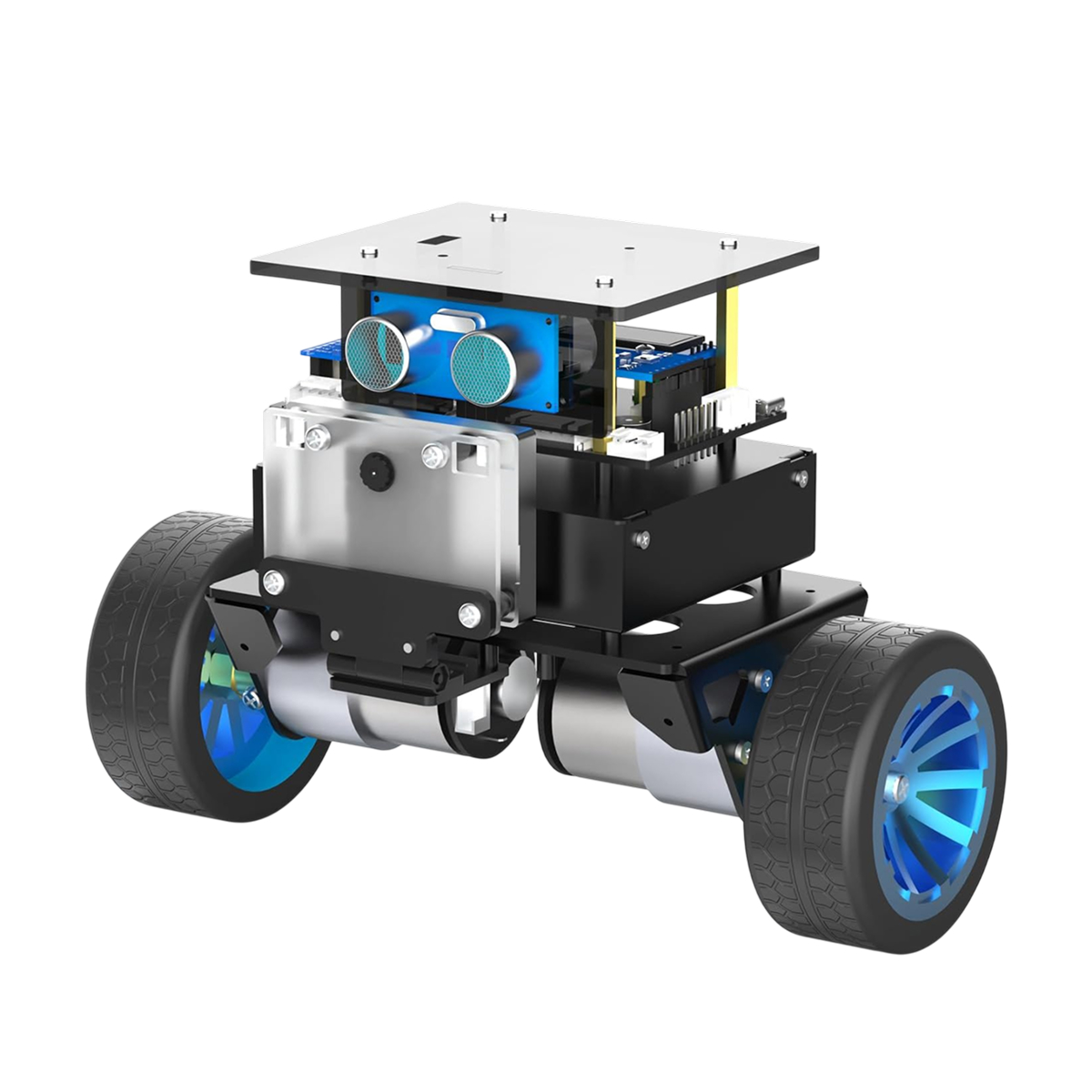
The Yahboom Coding Robot introduces engineering enthusiasts to the fascinating world of inverted pendulum dynamics and closed-loop control systems. Built around an industrial-grade STM32F103RCT6 microcontroller, it offers fifty-one programmable input and output pins for substantial hardware expansion. This makes it an ideal educational tool for collegiate engineering labs and serious hobbyists focused on feedback control loops. It transforms theoretical mathematical equations into thrilling physical motion.
Equipped with a precision six-axis inertial measurement unit, the platform executes real-time PID balance calculations hundreds of times per second. The high-resolution optical encoder motors provide rapid torque adjustments to keep the two-wheeled chassis upright even under significant external disturbances. A three-tier structural design allows the vehicle to carry payloads up to four kilograms while maintaining upright stability. This impressive load capacity opens up exciting possibilities for mobile camera rigs and autonomous payload transport.
Out of the box, the firmware comes pre-flashed with twenty functional gameplay modes accessible simply by rotating the drive wheel. An intuitive Android companion application provides real-time waveform visualization and live parameter tuning over Bluetooth connections. Users can modify proportional, integral, and derivative gains on the fly to observe immediate stability differences. This instantaneous graphical feedback dramatically accelerates understanding of modern control engineering principles.
Although the balancing algorithm introduces a higher theoretical barrier to entry for complete novices, the provided open-source C libraries are thorough. Users seeking advanced perception can upgrade the platform with radar units or dedicated machine vision modules via expansion ports. It remains an exceptional balance control kit that bridges the gap between basic maker electronics and sophisticated mechatronics engineering.
A coding robot is an educational hardware platform designed to teach programming, electronics, and mechanical engineering through physical computing.
These interactive kits combine microcontroller boards, electric drive motors, and environmental sensors that execute commands written in block-based or text-based software.
Unlike passive toys, these devices respond directly to environmental stimuli like obstacles, light patterns, audio cues, and wireless data commands.
They bridge abstract digital logic with tangible real-world outcomes, providing learners of all ages with practical STEM problem-solving skills.
Oliver Grant - Research Specialist
Owned by ONDIRA COMMERCE PTE. LTD.
© 2023 Vemistar, LLC. All Rights Reserved.
Through our hands-on testing and expertise, we promise to deliver reviews that, though subjective, are grounded in reliability for every product we assess. Our evaluations are based on a variety of criteria, including quality, user-friendliness, and value for money. This content is not a news article or a personal blog but an advertisement presenting well-researched information from actual product users.