
By Nathan Ford - Research Specialist
Picture this: A beautiful clear night, you’ve driven away from city lights, and the kids are excited to see stars – but then you struggle with a complicated telescope. Your hands fumble with confusing knobs as time slips away and frustration grows. What should be a magical moment turns disappointing when children lose interest.🌠
When you finally point the telescope at something, all you see are blurry shapes nothing like the amazing photos that inspired your trip. You feel that sinking feeling of having wasted money on something that doesn’t deliver what you hoped.
The situation gets worse as you try to find planets or star clusters, constantly adjusting and looking through poor-quality lenses. Instead of discovery and wonder, everyone feels frustrated and defeated.
Thankfully, modern beginner telescopes have changed everything. Today’s starter telescopes are designed to be user-friendly with good quality optics that make stargazing actually enjoyable for newcomers.
We’ve tested many different models to find telescopes that truly work for beginners. This guide shows you the 5 best telescopes for beginners of 2026, 🔭carefully chosen to give you amazing views of the night sky right from your first night out.
We focus on telescopes that show impressive details of the moon, planets, and stars even to untrained eyes.
Assessments of helpful features like simple pointing systems, easy controls, and useful guides to help newcomers
We look for clear instructions and features designed for people with no previous experience.
We consider included accessories, durability, and whether it can grow with you as you learn more.
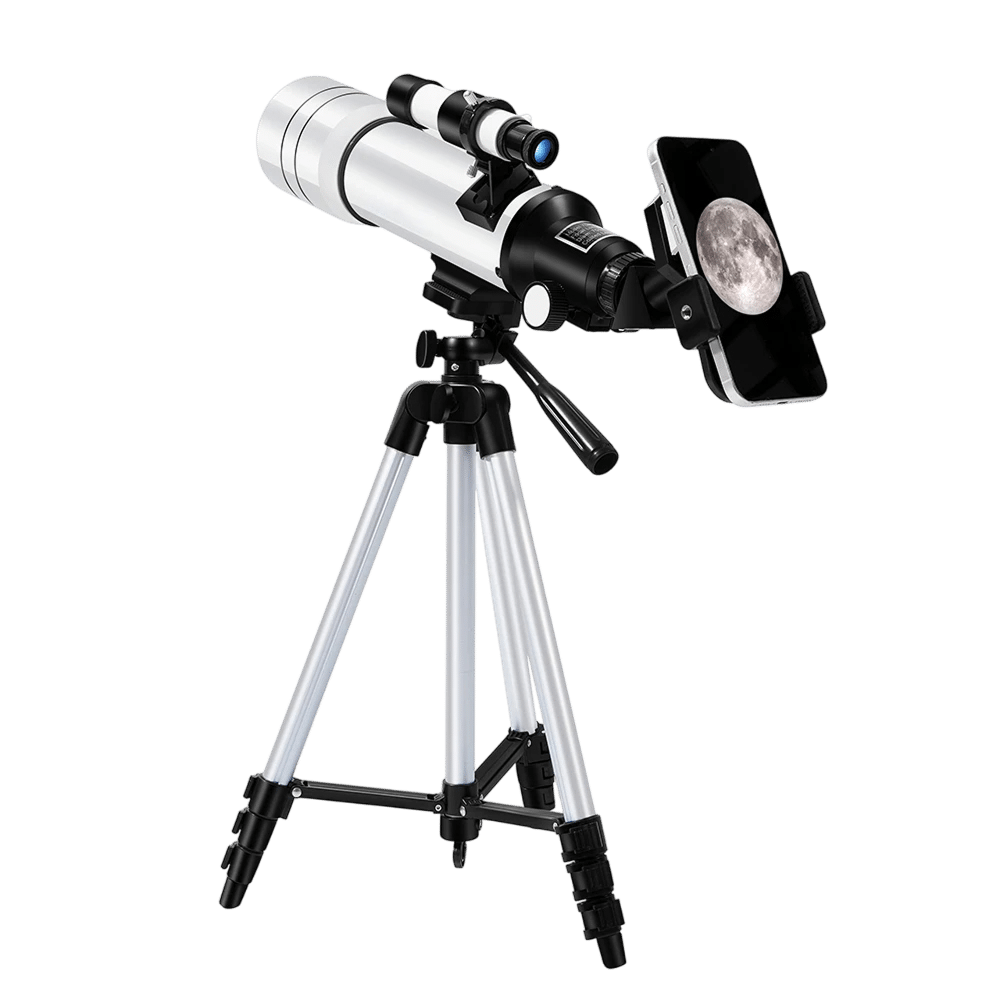
The Astrogazeir Telescope for Beginners is the clear frontrunner in the 2026 beginner market — a scope that doesn’t just promise an amazing stargazing experience but actually delivers one, starting on night one. 🔭 Its 70mm aperture combined with a 400mm focal length produces bright, sharp images that immediately silence skeptics, and its thoughtful design makes it accessible to children and adults alike.
What truly separates this telescope from the competition is its FCM multi-coated optical glass — a premium lens treatment that maximizes light transmission, eliminates chromatic aberration, and produces the kind of crisp color fidelity that makes first-time viewers gasp out loud. The 90° erecting BAK4 prism and 90° zenith mirror ensure images appear correctly oriented, making it far more intuitive to use than traditional refractors with inverted views.
The magnification system is genuinely exceptional for a beginner scope. Two interchangeable eyepieces — H20mm and H6mm — paired with 1.5X and 3X Barlow lenses deliver a jaw-dropping range from 20X all the way to 200X, covering every experience level: at 20–23X you sweep across the full Moon with ease; at 45–75X the lunar craters and Saturn’s rings snap into breathtaking focus; at 200X, planetary detail becomes precise and deeply satisfying. 🌟
One of the Astrogazeir’s standout modern features is the Bluetooth wireless remote control and smartphone holder, which transforms solo stargazing into a fully shareable experience. Point the telescope at Jupiter, mount your phone, connect via Bluetooth, and capture stunning images to share with family — no cables, no fuss, no technical expertise required whatsoever.
The included moon filter is a thoughtful touch that prevents overexposed, washed-out lunar views — a real problem with telescopes that don’t include one. Combined with the aluminum alloy tripod, which assembles without tools in minutes, the Astrogazeir arrives as a complete, fully ready-to-observe package. Nothing extra to buy, no confusing assembly manuals — just clear skies and wonder.
The Astrogazeir Telescope for Beginners earns our #1 spot because it delivers professional optical quality, a complete accessory package, and beginner-friendly design in one outstanding bundle. With stock regularly selling out and demand growing fast in 2026, we strongly recommend securing yours while this limited offer lasts. EXPLORE NOW!
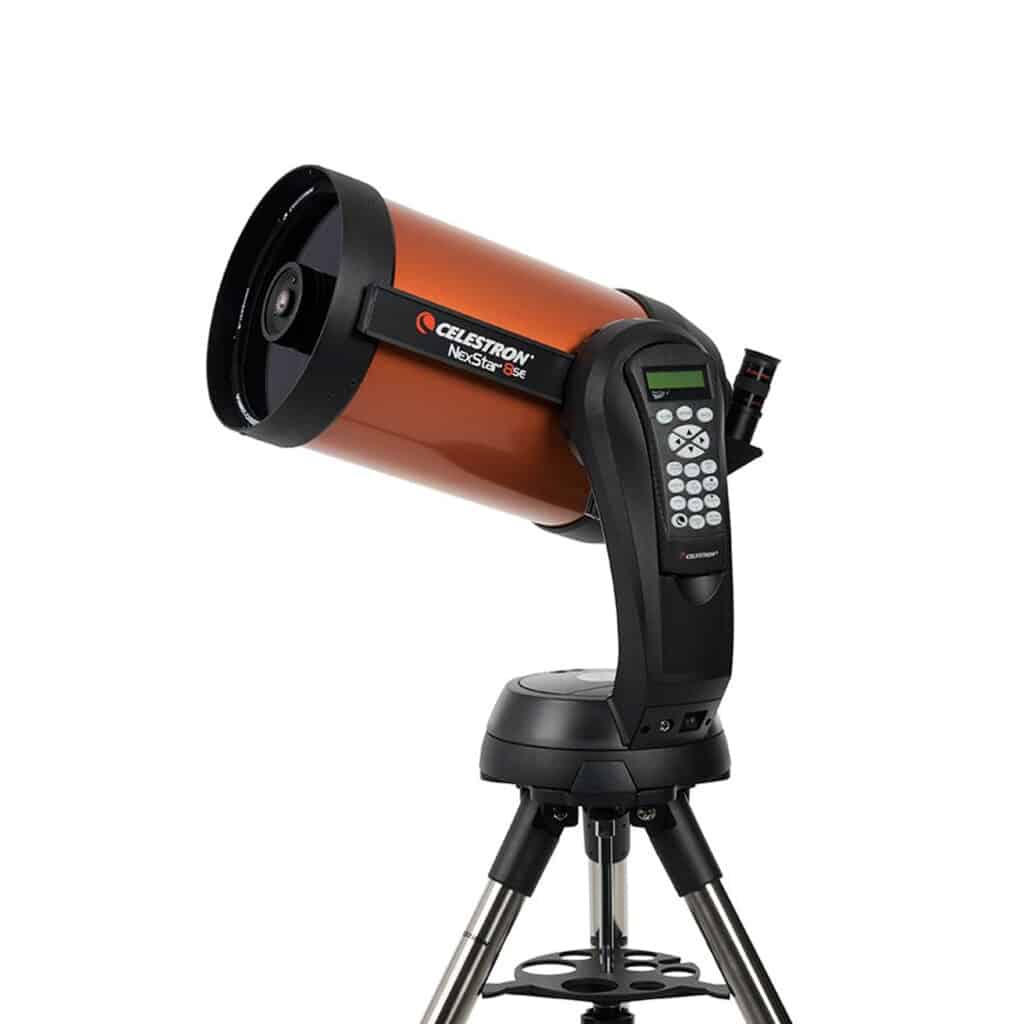
Celestron Telescope for Beginners earns second place combining amazing views with technology that does hard work. It’s perfect for beginners who want to see impressive celestial objects without learning navigate first.
What makes telescope special is large 8-inch aperture design that gathers lots of light, showing details smaller telescopes can’t reveal. You’ll see cloud bands on Jupiter and surface features on Mars that amaze you.
Standout feature is computerized system that finds celestial objects automatically. You choose what you want from hand controller’s menu of 40,000 objects, and telescope points itself right at target. This solves biggest challenge beginners face – finding objects.
Telescope is designed to be user-friendly with setup taking minutes. Alignment process is simple – SkyAlign technology guides you through steps with minimal input. Sturdy tripod keeps everything stable without being complicated.
If you have smartphone, you’ll appreciate WiFi connectivity that lets you control telescope through simple app. This familiar interface makes astronomy accessible while still teaching about night sky. Option to use either computerized features or manual controls gives best of both.
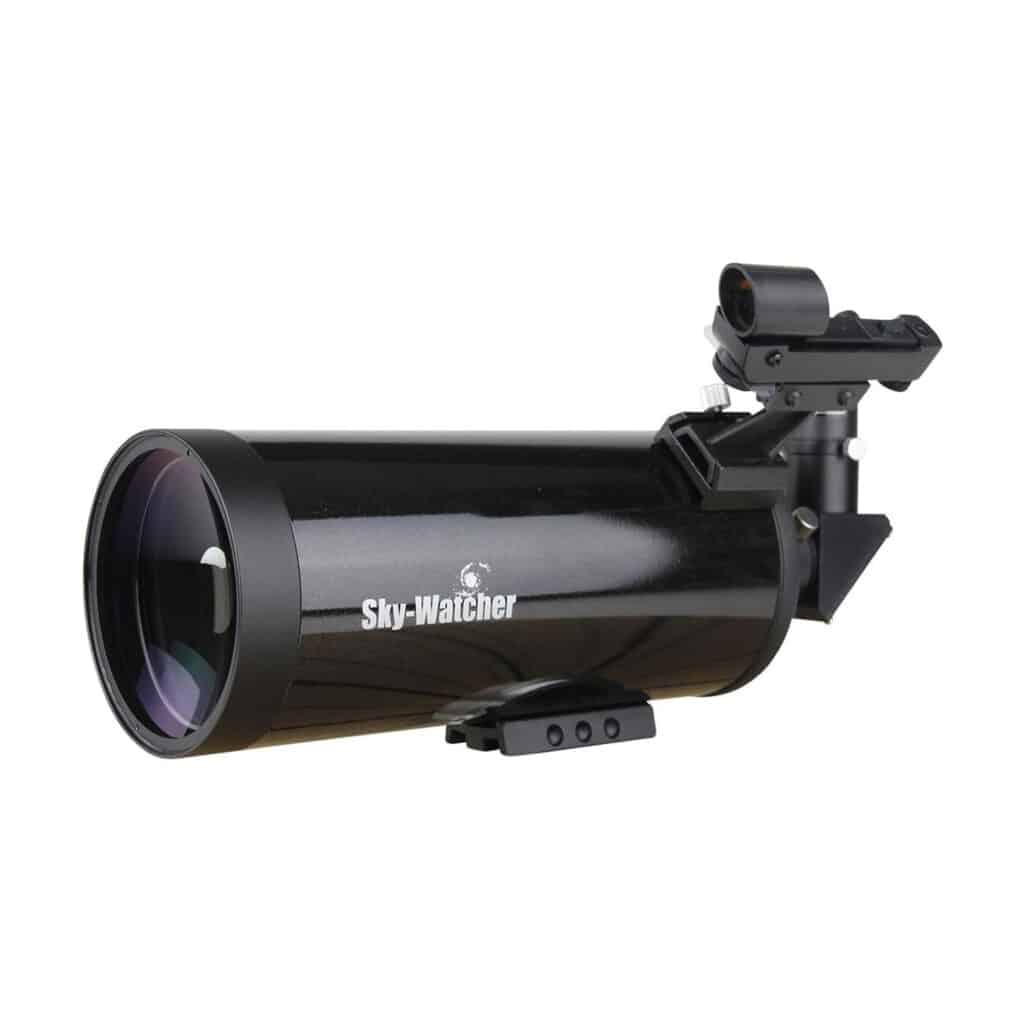
Sky-Watcher Telescope for Beginners is fantastic balance of quality, portability, value. This compact telescope perfect for beginners who need great views.
Telescope’s designed optical system provides surprisingly detailed images that impress from first use. Special lens coating creates wonderful contrast, showing celestial objects against dark background – giving that “wow” moment.
What sets telescope apart is exceptional image quality. Primary mirror uses coatings that achieve 94% light reflection, better than typical starter telescopes. This means you’ll see details in moon, planets, and star clusters missed with telescopes.
Design prevents stray light from entering tube, which helps deliver clearer images even if observing from areas with light pollution. This means you can get views from your backyard.
Sky-Watcher made telescope beginner-friendly with standard mounting options that are easy set up. You can attach it to regular camera tripod if you have one, saving money making setup simpler.
Everything needed comes in box, so you can start observing right away. Included eyepieces give you different magnification options, and angled eyepiece holder makes viewing comfortable for sessions.
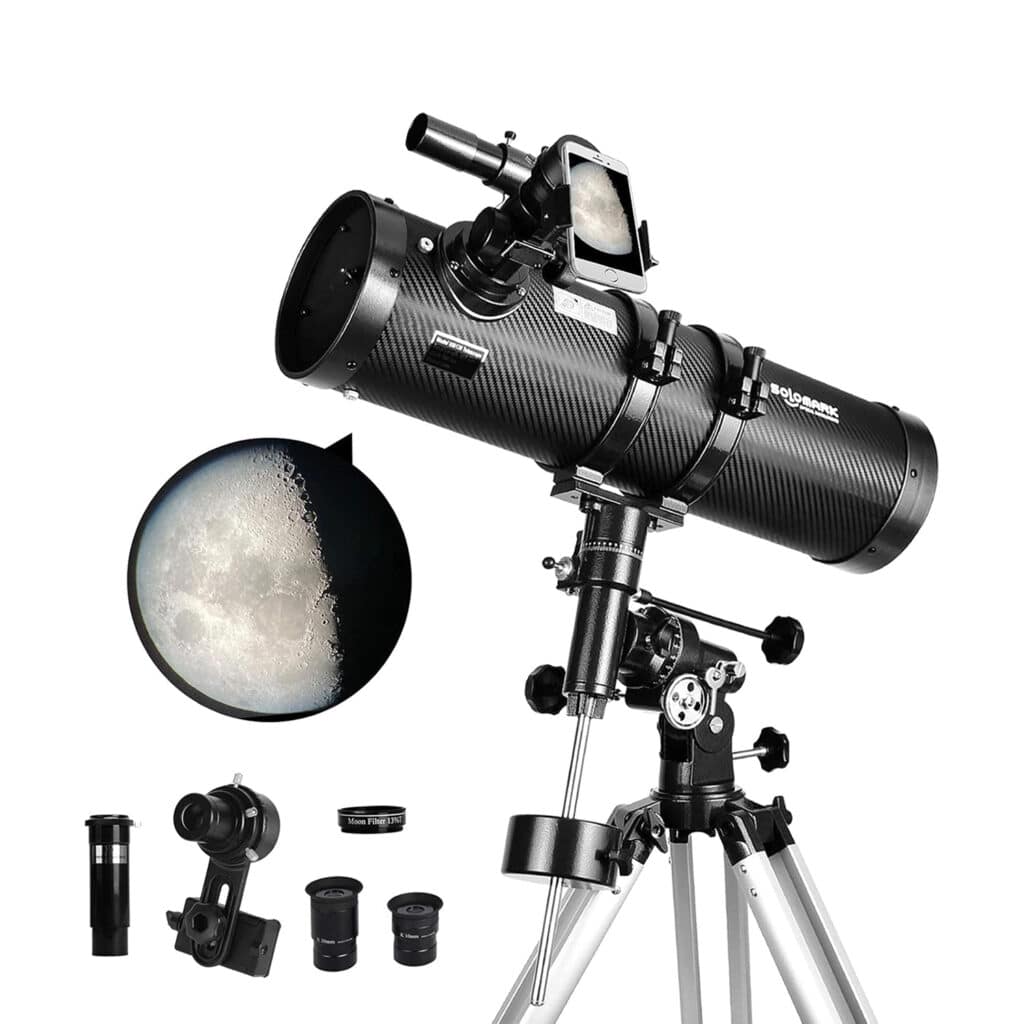
The SOLOMARK Telescope for Beginners is an excellent choice for beginners serious about learning astronomy. It offers a larger aperture at an affordable price.
The standout feature is the 130mm aperture, which is larger than most starter telescopes. This means you’ll see more details and fainter objects. The lens coatings maximize light, giving bright views of planets, moon craters, and even distant galaxies.
The German Equatorial Mount introduces beginners to proper astronomical tracking. With practice, you’ll learn to follow objects across the sky using the adjustment controls. This mount provides a way to develop real astronomy skills.
The telescope’s sturdy aluminum tripod provides excellent stability, minimizing vibrations that often ruin viewing with cheaper telescopes. The accessory tray keeps your eyepieces organized and ready.
The complete accessory package adds value. Multiple eyepieces give different magnification options. The moon filter is especially useful, toning down brightness so you can see craters and mountains in detail.
For those who love sharing discoveries, the smartphone adapter lets you connect your phone to take photos of the moon and planets. This helps maintain interest by allowing you to share astronomical discoveries.
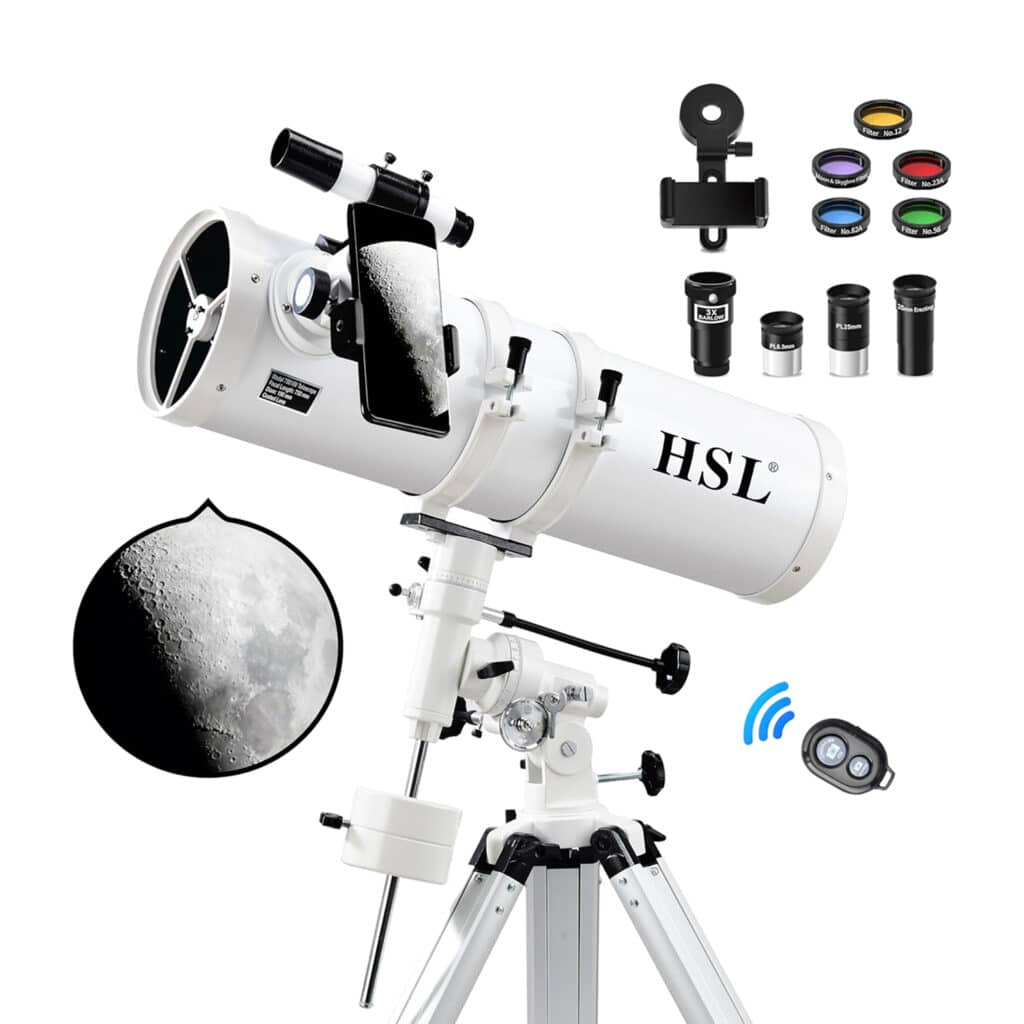
The HSL Telescope for Beginners rounds out our top five with impressive aperture, multiple magnification options, and educational accessories. This telescope is perfect for committed beginners who want to learn astronomy.
The telescope’s 150mm aperture combined with its 750mm focal length creates a system that reveals amazing details in celestial objects. You’ll see Jupiter’s cloud bands and Saturn’s rings with clarity.
The manual equatorial mount is designed to teach about astronomical tracking. The smooth controls let you make precise adjustments to follow objects across the sky. This mount helps you develop understanding of celestial movements.
One of the best features is the multiple magnification system. The combination of eyepieces with the Barlow lens gives you magnification options from 90x to 345x. This helps you learn which magnification works best for different objects.
The included color filter set is rarely found in beginner telescopes. The various filters help enhance different features on planets, teaching advanced observing techniques as your skills grow.
Modern users will appreciate the smartphone adapter and wireless remote, which let you take photos of what you’re observing. This connects astronomy with technology and helps maintain interest through sharing discoveries.
Telescopes for beginners are tools that collect light from distant objects to make them appear bigger. Beginner telescopes gather light through a main lens or mirror and focus it to create a magnified image through an eyepiece.
Three main types: refractors (using lenses), reflectors (using mirrors), and compound telescopes (using both). Each has advantages for newcomers. Refractors give sharp views of moon and planets, while reflectors offer larger apertures at lower prices, good for seeing faint objects.
Telescopes for beginners include user-friendly features like simple mounts and helpful guides. The important specification is aperture size – the width of the main light-gathering lens or mirror – which determines how much detail you can see.
Despite what many think, high magnification isn’t the important factor for beginners. Quality optics, stable mount, and good design matter more. A well-made smaller telescope often shows better views than larger but poorly made one.
Starter telescopes are great for learning about space, developing STEM skills, and enjoying screen-free time outdoors. Telescopes for beginners open a window to universe, turning tiny dots into fascinating celestial objects and expanding understanding of space.
Nathan Ford - Research Specialist
Nathan Ford, Senior Astronomy Equipment Analyst with 12+ years of experience in optical instruments. Holds a Ph.D. in Astrophysics and has personally tested over 200 telescope models across various conditions. Specializes in evaluating both entry-level and advanced astronomical equipment.
Owned by ONDIRA COMMERCE PTE. LTD.
© 2023 Vemistar, LLC. All Rights Reserved.
Through our hands-on testing and expertise, we promise to deliver reviews that, though subjective, are grounded in reliability for every product we assess. Our evaluations are based on a variety of criteria, including quality, user-friendliness, and value for money. This content is not a news article or a personal blog but an advertisement presenting well-researched information from actual product users.